

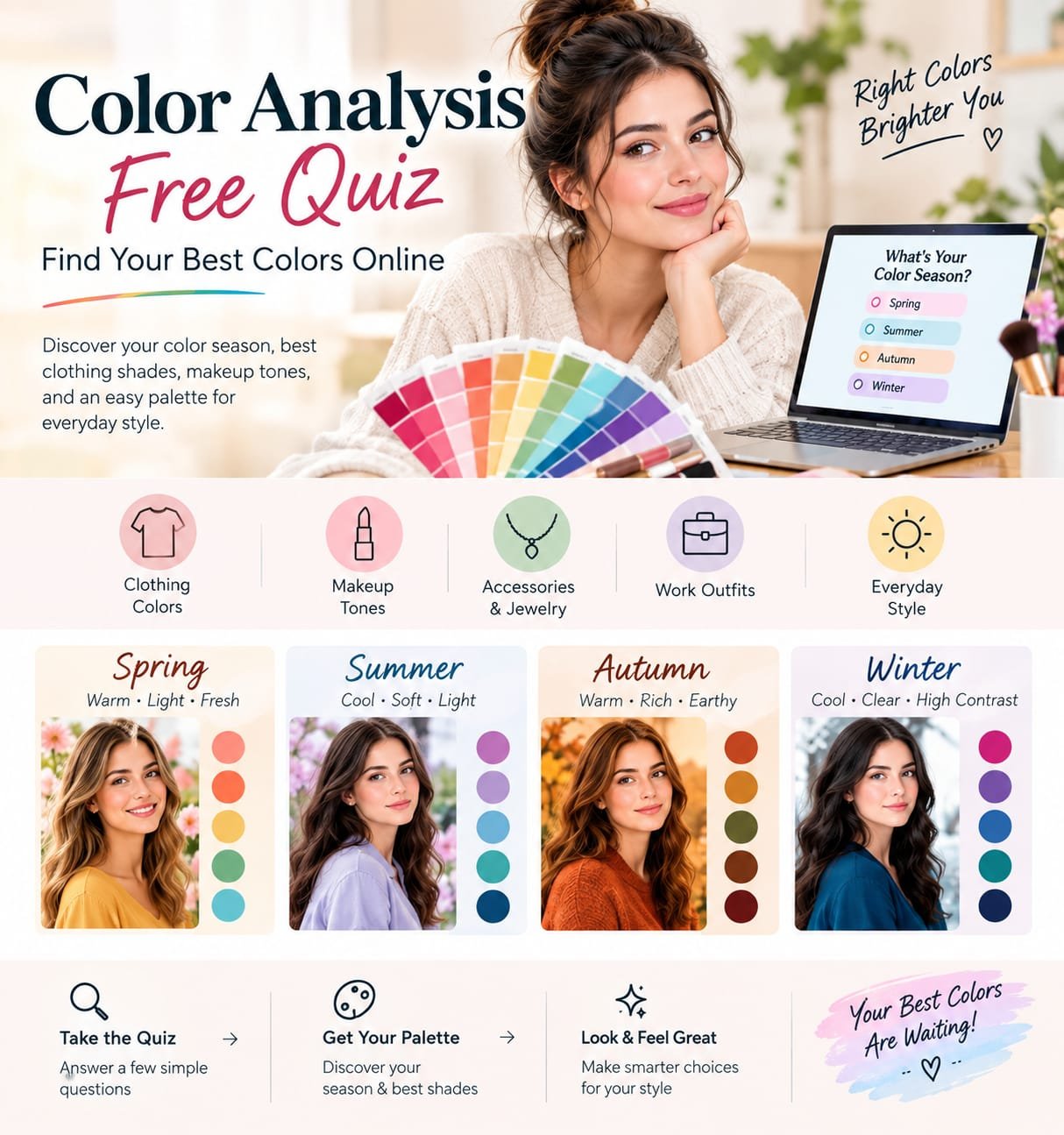
Finding colors that truly suit you can make getting dressed much easier. A color analysis free quiz can help you discover your likely color season by looking at features such as skin tone, undertone, hair, and eyes. Once you know your palette, you can make smarter choices for clothes, makeup, accessories, work outfits, and daily style.
What Is a Color Analysis Free Quiz? 🎨
A color analysis free quiz is an online tool that helps you identify colors that may complement your natural coloring. Most quizzes ask about your skin tone, undertone, hair, eyes, and how certain colors look on you. The result usually suggests a seasonal palette such as Spring, Summer, Autumn, or Winter.
What You Can Discover
A quiz may help you understand:
- Your likely color season
- Warm, cool, or neutral coloring
- Light, deep, bright, or muted characteristics
- Clothing colors that may suit you
- Makeup and accessory shades to explore
How Does a Free Color Analysis Quiz Work? 💻
Most online quizzes use a series of simple questions to estimate your personal color palette. Some ask about your natural features, while others let you compare colors or use a photo. The goal is to find patterns in temperature, depth, brightness, and contrast that can guide your color choices.
Common Quiz Questions
You may be asked about:
- Natural skin tone and undertone
- Natural hair color
- Eye color and clarity
- Whether gold or silver looks better
- How your skin reacts to sunlight
- Which clothing shades make your face look brighter
What Are the Four Main Color Seasons? 🌸🍂
The traditional seasonal color analysis system groups people into four broad categories: Spring, Summer, Autumn, and Winter. Each season has its own general color characteristics. Understanding these groups makes your quiz result easier to interpret and helps you see why certain shades may feel more flattering than others.
Spring
Spring palettes are generally warm, light, and fresh. Clear peach, coral, warm pink, light green, and similar lively shades may work well.
Summer
Summer palettes are usually cool, soft, and lighter. Dusty rose, soft blue, lavender, and muted cool shades are common choices.
Autumn
Autumn colors tend to be warm, rich, and earthy. Olive, rust, camel, warm brown, and deep golden shades are typical examples.
Winter
Winter palettes are generally cool, clear, and high-contrast. Jewel tones, crisp white, cool pink, navy, and deep cool shades are often associated with this season.
How Do 12 Seasonal Palettes Work? ✨
A four-season result gives you a useful starting point, but color analysis can become more specific through 12 seasonal palettes. These categories consider characteristics such as temperature, depth, and intensity. For example, someone may fall closer to Deep Winter, Cool Winter, Deep Autumn, or another more specific palette.
Why Sub-Seasons Matter
Two people can belong to the same main season but look best in different versions of its colors. A sub-season can help narrow your choices and create a more personal color palette.
How Should You Take a Color Analysis Free Quiz? 📸
Your preparation can affect how confidently you interpret the result. For the clearest starting point, focus on your natural appearance rather than temporary changes. When possible, use natural daylight and consider your natural hair color, especially if your hair is currently dyed or highlighted.
Quick Preparation Tips
Before taking the quiz:
- Use natural or balanced lighting.
- Avoid heavy makeup when using a photo.
- Consider your natural hair color.
- Look at your skin without strong colored lighting.
- Answer questions based on your usual natural coloring.
What Should You Do After Getting Your Result? 🧥
Getting a season is only the beginning. The real value comes from understanding how that palette fits your wardrobe and lifestyle. Instead of replacing everything you own, start by testing a few recommended shades. Notice how they affect your overall appearance, then gradually build a useful personal color palette.
Start With Everyday Colors
Try your suggested colors in:
- Tops and dresses
- Scarves and accessories
- Lipstick and blush
- Jewelry
- Work clothing
- Everyday outfits
What If Your Quiz Result Feels Wrong? 🤔
A free quiz provides guidance rather than a perfect final answer. Different quizzes can use different questions, color systems, and scoring methods, so results may sometimes disagree. If your result feels unusual, compare it with real colors instead of immediately assuming the quiz is wrong.
Test Your Result
Place a few colors near your face in good lighting. Look for shades that make your complexion appear more balanced and your overall features look clearer. If another season consistently looks better, that may be worth exploring through a second quiz or professional analysis.
How Can You Use Your Color Palette in Daily Life? 👗
Your color palette should make style easier, not more complicated. You do not need to wear only your recommended shades. Instead, use them as a helpful guide when choosing new clothes, makeup, jewelry, or accessories. Over time, you may notice which colors make your wardrobe feel more coordinated.
Build a Simple Palette
Start with a few reliable colors for your everyday wardrobe. Then add accent shades for variety. This approach can make shopping easier because you already have an idea of which colors you want to look for.
How Can Color Analysis Help With Work and Shopping? 💼🛍️
Color analysis can also be useful outside special occasions. A practical palette can help you choose professional clothing, create easier outfit combinations, and avoid buying shades that rarely get worn. For work, focus on dependable colors that feel polished and comfortable while still reflecting your personal style.
Make Smarter Choices
Use your palette when shopping for:
- Office shirts and dresses
- Blazers and trousers
- Interview outfits
- Everyday basics
- Accessories and jewelry
- Makeup for professional settings
Is a Free Color Analysis Quiz Accurate? 🔎
A free color analysis quiz can be a helpful starting point, but it should not be treated as an exact scientific measurement. Lighting, screen settings, dyed hair, makeup, and the quiz method can influence the result. Your best approach is to combine the quiz with real-life color testing and your own observations.
Quiz or Professional Analysis?
A free online quiz is convenient and useful for discovering possible colors. Professional color analysis can provide more detailed assessment, especially when your result falls between seasons or different quizzes repeatedly give conflicting answers.
Frequently Asked Questions
Is a color analysis free quiz really free?
Many online quizzes are available at no cost, although some tools may offer paid features or additional recommendations.
Can I find my color season online?
Yes. A free online color analysis can give you a likely season based on your natural coloring and quiz answers.
What if two quizzes give me different results?
Compare the questions, lighting, and color systems used by each quiz. Then test the suggested colors near your face.
Can color analysis help with makeup?
Yes. Your palette can help you explore suitable lipstick, blush, eyeshadow, and other makeup tones.
Can I use color analysis for work clothes?
Yes. Your palette can make it easier to choose coordinated, professional colors for office and interview outfits.
Conclusion 🌷
A color analysis free quiz is a simple way to explore your color season and discover shades that may complement your natural coloring. Use the result as a starting point, test colors in real life, and gradually build a palette that works for your wardrobe, makeup, work, and everyday style.